
Treatment of varicose vein disease
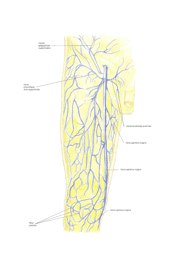
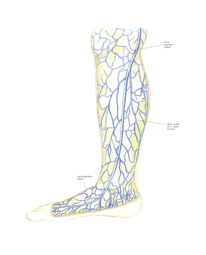
Varicity mainly develops on the lower limb. It may develop at different stages, ranging from superficial skin capillary expansions, superficial side expansions, to vein saphena varicosia becoming curved.
The adult population is around 30%vascular disease develops in. Its development is influenced by the weakness of the congenital vein wall, as well as by various predisposition factors such as pregnancy. occupation and hormonal factors (e.g. contraceptives).
Patients often seek medical advice mainly because of cosmetic problems. Capillary expansions or ‘brooms’ in the area of thighs and legs are very common. These lesions very rarely cause functional differences other than cosmetic problems, such as leg rupture, difficult foot feeling, night-time spasms.
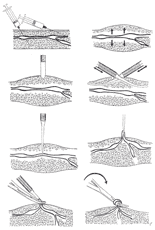
Its treatment is well suited to sclerotating, with different concentrations of sclerotating solution (Aethoxysclerol 0,5 %1 %and 2 %) inject into the lumen of the vein, which closes the capillary lumen by causing inflammation. After treatment, compression joints on the limbs tighten the walls of the veins, preventing the renaissance of organised thrombus. This gives rise to the desired transformation into fibrous-heart tissue, i.e. sclerotisatio.
The Várady spacing and hook method are well suited to more extensive, mainly adventitious, varixes. The intervention can be used well in local anaesthesia for a smaller scale, or in close-to-vertebral or anaesthetic surgery for a larger scale. Long sections of the vein can be removed from small incisions (2-3 mm) during surgery using a hook and spatula. After surgery, almost the scars are invisible, and the limb is well loaded.
In the case of larger, more extensive varixes locating to the saphena strain, the enlarged vein, which no longer performs its function well, is removed by surgery as part of a day-to-day surgery. The scar, which is barely noticeable, is left in a hidden place during surgery, on the ankle and in the groin, and the tributaries in the thigh and lower legs are removed from small incisions according to the Várady method.