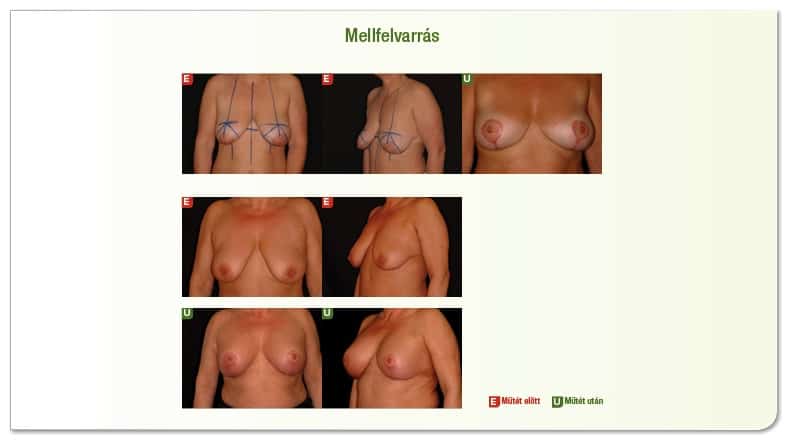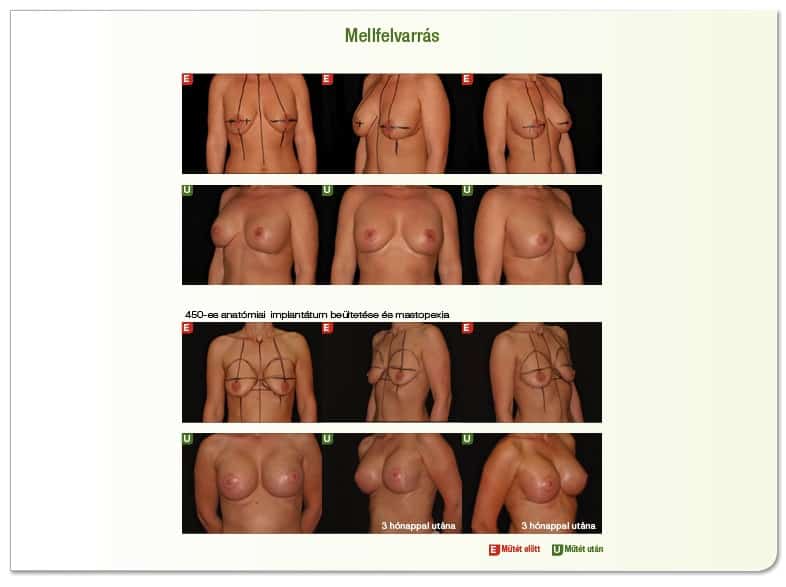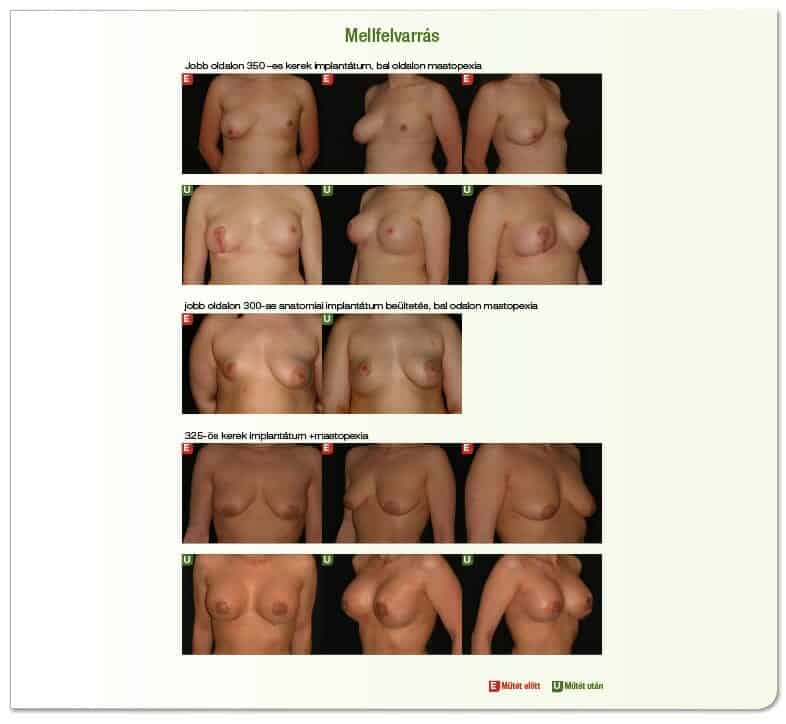

Breast scavenging (mastopexia)
The ideal breast is a cone- or hemispherical formula with its base on the chest wall, the most prominent point being the bud. It does not exceed the forward snowline on the side and its internal boundaries are between 3 cm and 4 cm apart. The straight line imagined through the buds, both above and below the breast shaft, is convex and equally bulky.
At the end of sexual maturation, the breast becomes enlarged and hemispherical, for which the fat layer, capsula adiposa, is primarily responsible, because the gland population, parenchyma, develops during pregnancy, is the largest at the time of lactation, and then develops back to its original size from the end of breast-feeding. This is a physiological process, but it persists, the skin of the breast expands, and low-pigment lines such as pregnancy scars may appear. Flexible elements can protrude and become photic.
Naturally, this phenomenon can occur without breastfeeding or even without pregnancy, after a significant reduction in body weight, or only with age. It may also occur as a horse mammalian malformation.
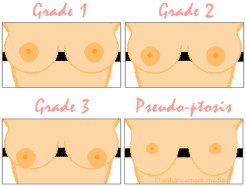
The extent of elongation and elongation may vary, which also determine the surgical solution.
It follows from all of the above that the essence of the operation is: remove excess skin, return the breast stock to its original location and hold it in place by stitching inside and tensioning the skin.
Surgery that stops the messes from perforating or echoing is commonly referred to as breast sewn. There are plenty of ways to restore the desperate breast, based on the shape of the breast, its size and the touch of the herd.
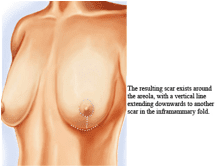
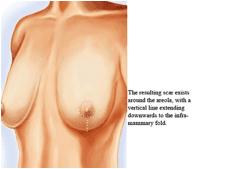
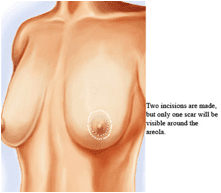
In addition to the circular and vertical intersection line, a transverse curved intersection line is required in the lower bending recess when conventional breast plasticisation is performed.
Vertical breast plastics require a vertical pruning around the bud yard and a lower vertical pruning to place the bud higher, to suspend the flock and to compact the breast.
The so-called circulatory breast sewing is carried out from the incision around the Bumbud Court, thus compacting the stand and placing the Bumbud Court at an appropriate height.
Surgery can also be carried out under local anaesthesia in the case of small breasts, but most often in anaesthesia.
During surgery, after pre-selection, the excess skin is removed and the breast is condensed and compacted to give a new shape to the breast at the desired height. The bibs and boot yards are placed at the desired height, and during surgery, a reduction in the boot yard may be carried out on the basis of a preliminary discussion. The pruning welds in the subcutaneous tissue and in the lower layer of the skin are closed and then completely removed. At the end of the operation, the breasts are fastened by patching them so that they do not pull and tighten the welds by weight, as this would affect scarring in the wrong direction.
The duration of the operation is 1.5 to 2 hours. The average stay in a hospital is 1-3 days.
Welds are removed in 7 to 14 days.
It is recommended that a brassière be worn for at least 6 weeks to relieve wound lines during the night – day, and later only during the day. Careful physical loading, all sporting activities are prohibited for 6 weeks. Sunshine and sunbeds should also be avoided during this period to avoid hyperpigmentation of the weld. After sewing, it is recommended to handle the scarring lines using an ointment or silicone patch or laser treatment to make the scars as fine, invisible, aesthetic acceptable as possible.