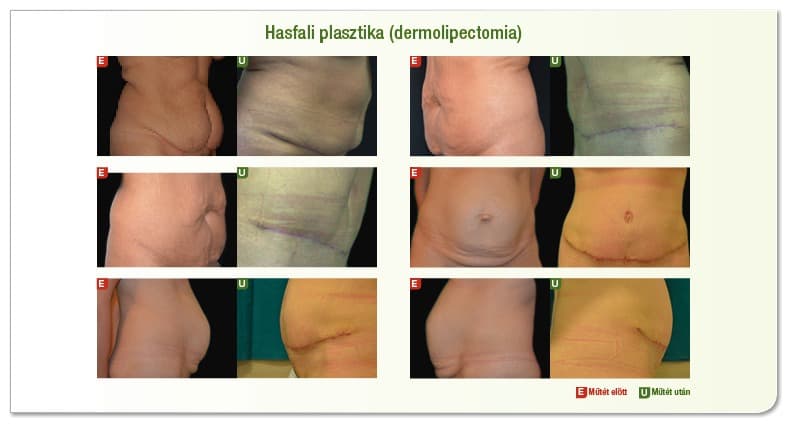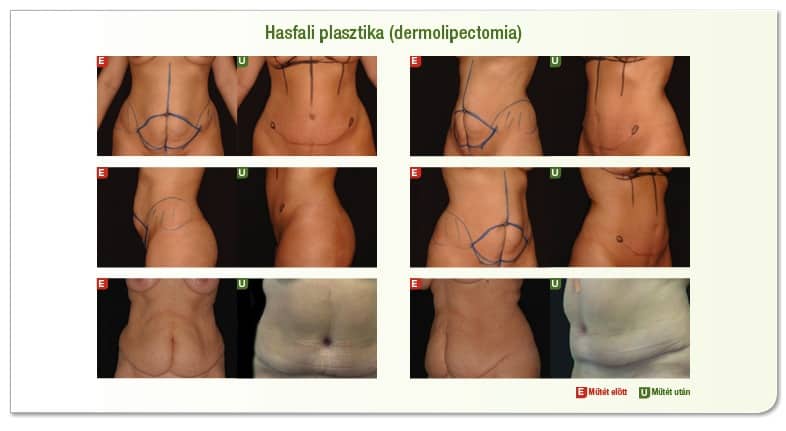

Abdominal plastic (dermolipectomy)
The shape and shape of the abdomen play a major role in shaping the aesthetic appearance and the harmonious, proportionate body shape. Following large fluctuations in body weight, obesity or pregnancy, rates change, extended skin and subcutaneous connective tissue do not regain elasticity, turgidity, becoming loose, flaky.
Unfortunately, the time cannot be stopped. this may reduce the tension of the skin and cause a similar problem. The shape and contour of the abdomen are determined by the state of the skin fat and muscle in the abdominal wall. The problems can be divided into the following groups:
- only fat tissue reproduces ‘small pad-like’ under the skin of the abdominal wall
- skin loss of elasticity, flaky, wrinkled, striation, excess skin
- the abdominal wall is protruding, the straight abdominal muscle is distant from each other, so the abdominal wall is forward
These problems may occur individually or in combination. Often, the elongation of the skin goes hand in hand with the deposition of excess fat on the abdomen. Abdominal plastic is not suitable for the resolution of fat surpluses and deformities due to obesity. It should be stressed that surgery should only be carried out during the optimal period, once the ideal body weight has been achieved, in order to ensure a satisfactory and lasting aesthetic result.
Surgery consists of removing excess skin from the abdominal loose, together with excess fat, and reconstructing the muscle of the abdominal wall if it protrudes. Fat multiplication can be reduced by grease extraction. As a result of the operation, the remaining skin becomes firm, and as a result of the removal of excess fat and the restoration of the muscles of the abdominal wall, the shape of the abdomen improves substantially, sometimes reducing the circumference of the waist.
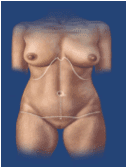
The intervention may be performed under anaesthesia or spinal anaesthesia. The average duration of surgery is 1.5-2 hours. The intersection line between the two hip blades (hip spindles) is in the form of an arch above the pub and a circular incision around the umbilical cord is also necessary.
Depending on the degree of obesity and the amount of excess skin that may develop, the cut line may often extend beyond the shoots, with bikini largely covered. During surgery, the skin of the abdomen is separated from the abdominal wall over a large area up to the ribs and down to the pubic bone.
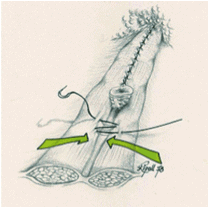
During surgery, the flank of the straight abdominal muscle is joined on the centre line by knotted welds.
By pulling off the prepared layer of skin fat, the excess is carved out and the umbilical heel is sewn into an opening in its original position. Given the large wound surface, even with the most careful haemostasis, it becomes necessary to install a drainage tube (pipes) at the end of the operation, which with mild suction helps the skin to stick. The drainage tube(s) is (are) removed on days 1 to 7 after surgery. Hospitalisation takes 4-7 days and welding takes 2-3 weeks.
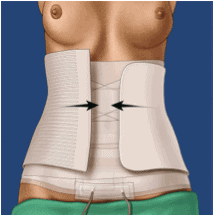
After surgery, physical care is recommended and sport should not take place for 6 weeks. Thereafter, full physical activity can be achieved after three months with gradual loading. Bed calm is not necessary and may even be harmful in some respects. Flexible abdominal bonding is required for 6 weeks.
In some cases, it may be necessary to handle and refine a scarline with creams, laser treatment, silicone pass, wearing a compression clothes permanently in order to obtain a satisfactory aesthetic result. The result is long-lasting, but during pregnancy and repeated obesity, the abdominal wall may relax. In all cases, consideration is given to the patient’s personal rice-cooking factors by means of pre-operative studies.
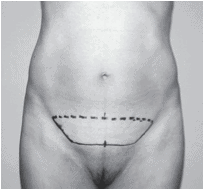
In specific cases where excess fat and possibly muscle elongation are localised to the lower abdominal area, carry out sufficient abdominal plastic, ‘mini abdominaloplastica’. In this case, the area of the umbilical cord is intact, only the area of the lower abdomen is affected. The pruning area is smaller than that of a traditional abdominal plastic.