
Arcplastics
Ageing is characterised by a progressive reduction in skin elasticity and thickness, as well as a loosening of the link to subcutaneous tissues. The wilting of the fat, muscle and bone can further exacerbate the swelling and clogging of the skin. With age, the amount of elastic fibres decreases rapidly, resulting in inelasticity of the skin. Reduction of collagen level to breaking strength it leads to a reduction. The effect of sunlight differs from the normal ageing process, i.e. the effect of sunlight does not accelerate the ageing process but is added. By wasting the skin, the skin breaks up at the fixed points according to gravity. The nasolabial recess deepens and a spoon develops on the chin. The reduction of the face fat knot further deteriorates the appearance. Tension in the subcutaneous muscle leads to the formation of folds and wrinkles, which are increasingly pronounced as the skin loses elasticity. The process starts at an individually varying age and progresses at an individually varying speed. Changes are beginning to develop around the 1930s, with excess skin in the eyelid, the development of sarkala and the deepening of the nasolab recess. Around 40, the nasolabilais and eyelid recesses continue to deepen, forming the wrinkles of the glabella and the faces. At the age of 50, the neck is wrinkled, the skin folds along the jaw, and the nose tip is a horse. In the 60s and 1970s, the skin of the chimaera and the jaw becomes thin.
In addition to the individual’s intrinsic properties, certain factors accelerate the natural ageing process of the skin (weather factors, excessive sunshine, humidity, wind, temperature fluctuations, lifestyle habits: excessive stress, alcohol and nicotine consumption, insufficient sleep, lack of rest, certain diseases: hepatic disease, vascularisation, high blood pressure, diabetes, certain medicines) are further exacerbated by increased movement of facial muscles, co-morbidities, trauma and frequent body weight changes.
Face-lifting involves the excision of an excess of elongated, logo, flaky, wrinkled skin, thereby tensioning the skin in order to restore the lipstick, turgidity and smoothness of the face. The nasolabial retardation is formed by the adhesion of SMAS to the skin, the sinking of the facial tissues, the wilting of the surrounding fat tissue and the wilting of the Bucca fat tissue. The engraving of the nasolabial fold into the skin is not solved by facial plastication.

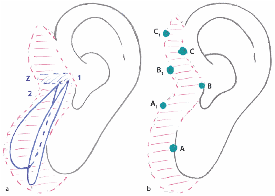
Previous surgical procedures have been limited to excision of excess elongated skin and tension after welding back, and today’s procedures are no longer complacent to this extent, but they also exert tension on elongated flaky muscles and faeces, thus providing a more durable result. Surgery can be performed under local anaesthesia and anaesthesia. The duration of surgery can range from 2 to 3.5 hours, depending on the type of intervention. The principle of surgery is similar in all cases, which can be performed only in the upper or lower part of the face, in the entire area of the face, on the fronts or on the neck.
Whatever surgery is carried out, most of the surgical scars remain hidden for the eye in the area of the scalp and behind the ear. The thin scar in the groove in front of the ear can only be seen as a thin, delicate scar that is barely visible.
At the end of the operation, a crushing joint is applied to the head, leaving the middle part of the face free, which is maintained for 1-2 days. A drain tube is placed on the surgical site to derive leaking bleeding, which is held 1-2 days ago. Welds are removed 8-10 days after surgery. Hair can be washed after sewing, make-up of the face for 3 weeks after welding is not recommended. After welding, any activity that may cause blood abundance in the face (tightness, sunshine, strong warm action, consumption of hot, spicy dishes, alcohol) should be avoided in the first week.Hair staining for 3 weeks, sunshine for at least 6 weeks is not recommended.
The result of the operation and its durability depend on age and specificity. Surgery can be repeated if necessary in years’ time, but multiple surgery is not recommended because the face becomes rigid and mimicless.