
Orrplastics
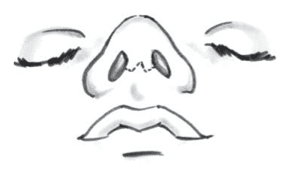
The nose is the most representative and striking part of the face, and its formal differences and deformities can cause a marked distortion of the face. Variations in bone or cartilage parts of the nose can cause problems. The foreform should always be adapted to face harmony or to fit a male or female face. Significant gender differences can be observed. Perfect, no ideal nose. Variations may be congenital or acquired.
Its manifestations include differences in form, size, position, position in relation to the facial skull: oblique or different axes, change in ratios between components, asymmetry. Correction of the nose is nothing other than making the nose harmonic, which eliminates the lesions that cause distortion of the nose parts.
Nasal plastia is mainly recommended to women after 16 years of illness and to men after 18 years of illness. No visible scars are to be feared, as most nasal plastics, apart from open nasal plastics, are carried out under the skin by penetrating from the mucous membranes. Both cartilage and bone differences are corrected during surgery.
Previous surgical procedures have been limited to excision of excess elongated skin and tension after welding back, and today’s procedures are no longer complacent to this extent, but they also exert tension on elongated flaky muscles and faeces, thus providing a more durable result. Surgery can be performed under local anaesthesia and anaesthesia. The duration of surgery can range from 2 to 3.5 hours, depending on the type of intervention. The principle of surgery is similar in all cases, which can be performed only in the upper or lower part of the face, in the entire area of the face, on the fronts or on the neck.
Whatever surgery is carried out, most of the surgical scars remain hidden for the eye in the area of the scalp and behind the ear. The thin scar in the groove in front of the ear can only be seen as a thin, delicate scar that is barely visible.
At the end of the operation, a crushing joint is applied to the head, leaving the middle part of the face free, which is maintained for 1-2 days. A drain tube is placed on the surgical site to derive leaking bleeding, which is held 1-2 days ago. Welds are removed 8-10 days after surgery. Hair can be washed after sewing, make-up of the face for 3 weeks after welding is not recommended. After welding, any activity that may cause blood abundance in the face (tightness, sunshine, strong warm action, consumption of hot, spicy dishes, alcohol) should be avoided in the first week.Hair staining for 3 weeks, sunshine for at least 6 weeks is not recommended.
The result of the operation and its durability depend on age and specificity. Surgery can be repeated if necessary in years’ time, but multiple surgery is not recommended because the face becomes rigid and mimicless.
No damage to smell or breathing occurs during surgery.
Nasal plastia is a low-risk surgery with no significant pain and may leak blood for a few days. Swelling or discoloration around the eye is eliminated in 2-3 weeks, and the process can be accelerated by high head pads, calming, cooling. Wearing spectacles and blowing nose for approximately 3 weeks is prohibited.
At the end of the operation, a crushing joint is applied to the head, leaving the middle part of the face free, which is maintained for 1-2 days. A drain tube is placed on the surgical site to derive leaking bleeding, which is held 1-2 days ago. Welds are removed 8-10 days after surgery. Hair can be washed after sewing, make-up of the face for 3 weeks after welding is not recommended. After welding, any activity that may cause blood abundance in the face (tightness, sunshine, strong warm action, consumption of hot, spicy dishes, alcohol) should be avoided in the first week.Hair staining for 3 weeks, sunshine for at least 6 weeks is not recommended.
The result of the operation and its durability depend on age and specificity. Surgery can be repeated if necessary in years’ time, but multiple surgery is not recommended because the face becomes rigid and mimicless.